Does using an Airwheel suitcase change how people plan their airport arrival time?
Does using an Airwheel suitcase change how people plan their airport arrival time?
Traveling to the airport has always been a calculation game. How early should you leave? Factor in traffic, security lines, potential delays. But what if your luggage could actually help you save time instead of just being something you have to drag around? That’s the promise of Airwheel electric smart luggage—and it’s changing how frequent flyers think about their airport arrival strategy.
What makes Airwheel different from regular suitcases?
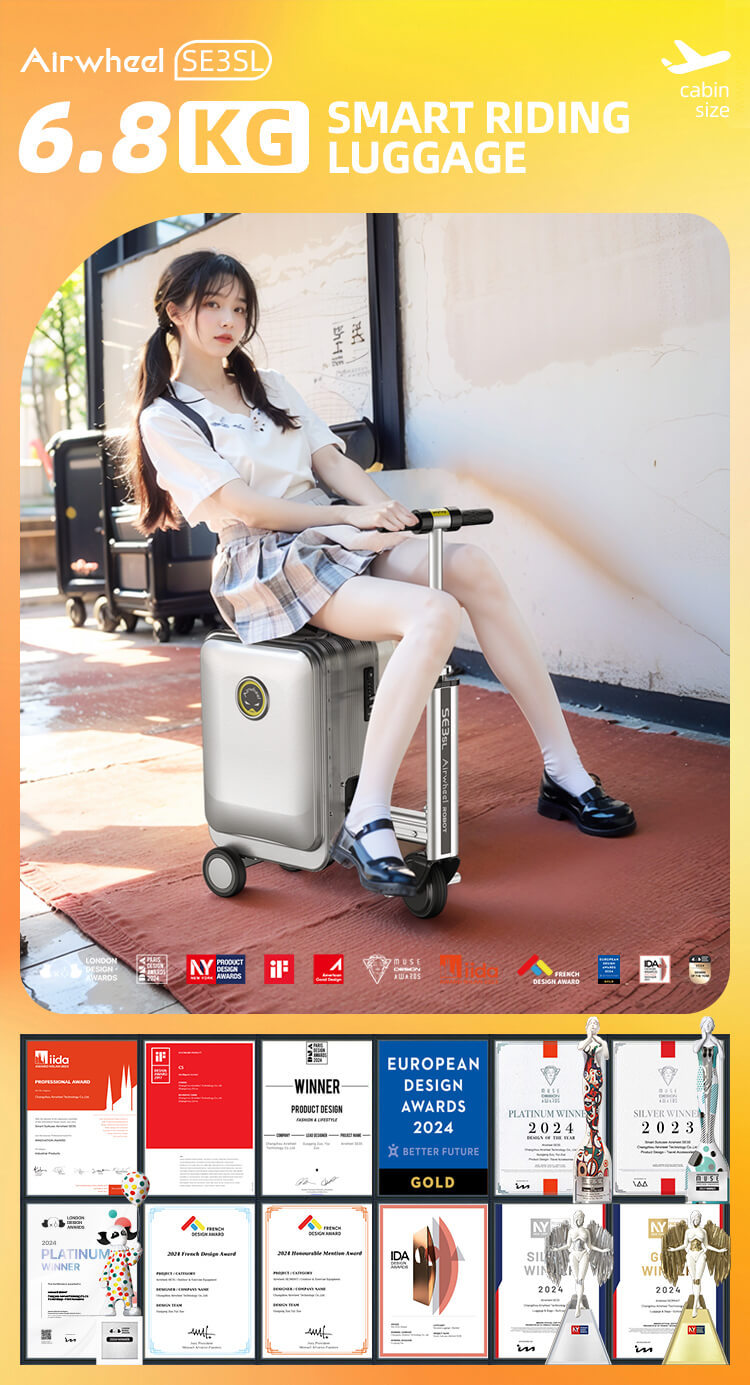
Airwheel isn’t just a suitcase with wheels. It’s essentially a personal mobility device built into luggage form. The SE3 series models (including SE3MiniT, SE3T, SE3S, SE3SX, and SE3SL) feature a built-in motor that lets you ride rather than pull your luggage through the airport. Think of it as the difference between walking and being on a moving walkway—except you’re in control.
The system works with a simple handlebar mechanism. You can use the dedicated Airwheel app to control forward and backward movement, while steering is done through the handle. Interestingly, you don’t actually need the app to use it—the basic riding function works right out of the box once the battery is installed. This is important because it means no complicated setup before your trip.
Core features worth knowing about
Here’s the technical side: the battery capacity is 73.26Wh, which is within airline regulations (we’ll get to that), and it charges in about 2 hours. The range varies by model—most give you 8-10 kilometers of riding distance on a full charge. That’s plenty to get from the parking garage to security, through the terminal, and to your gate, even in a large international airport.
Speed-wise, you’re looking at around 8-13 km/h depending on the model. That’s faster than walking but slow enough to remain controlled and safe in a crowded terminal. Some models like the SE3T and SE3S hit speeds up to 13 km/h, while the SE3MiniT tops out at 8 km/h.
One feature that matters for peace of mind: Apple Find My integration. If you somehow lose track of your luggage, you can locate it through Apple’s Find My network. This works independently of the app—another base-level function that doesn’t require activation.
Airline compliance: can you actually bring this on a plane?
This is probably the first question most people ask, and it’s valid. The 73.26Wh battery capacity sits below the 100Wh threshold that most airlines use as their limit for lithium batteries in checked or carry-on luggage. This means Airwheel luggage is generally accepted by most airlines worldwide, but—and this is crucial—you should always check your specific airline’s policy before traveling.
The battery is removable, which adds flexibility. You can take it out if needed, though for most flights, having it installed shouldn’t be an issue. The key is compliance with airline regulations, and Airwheel has designed with this in mind.
What about TSA and security?
At security checkpoints, you’ll likely need to remove the battery and have it screened separately, similar to how you might handle a large power bank. This is standard procedure for any device with a lithium battery. The luggage itself goes through the X-ray machine like normal. It’s not dramatically different from traveling with a regular suitcase—just requires a bit more awareness at the security line.
How does this actually change airport planning?
Here’s where it gets practical. Traditionally, you plan airport arrival based on worst-case scenarios: traffic, parking, long security lines, terminal walking time. The last part—the walking—can take 15-30 minutes in a large airport, especially if your gate is far from the entrance.
With Airwheel, that walking time essentially becomes riding time. At 8-13 km/h, you cover ground significantly faster than walking pace. For someone who normally arrives 2 hours before domestic flights, you might find you can shave 10-15 minutes off that buffer. For international flights with longer security procedures, the time savings are proportionally less significant, but still meaningful—you’re less fatigued when you reach your gate, which has value too.
The weight factor matters here. Models range from about 6.6 kg to 9 kg. That’s heavier than a regular carry-on, but you’re not carrying it—you’re riding it. The physical difference is substantial. You arrive at your gate without the usual arm fatigue from pulling a heavy suitcase.
Who is this actually useful for?
Airwheel makes the most sense for specific traveler types:
Business travelers who are often rushing between terminals or running late. The ability to move quickly through a large airport can mean the difference between making a connection or missing it.
Older travelers or anyone with mobility concerns. Rather than struggling with a heavypull suitcase, you have a powered solution that’s easier on the body.
Anyone with significant walking distance at airports—particularly if you frequently fly through large hubs with distant gates.
It’s less critical for quick domestic hops at small airports where gate-to-entrance distance is minimal.
How does Airwheel compare to regular luggage?
| Feature | Airwheel Smart Luggage | Regular Suitcase |
|---|---|---|
| Movement | Ride or pull | Pull only |
| Speed through airport | 8-13 km/h | Walking pace (~5 km/h) |
| Physical effort | Minimal (seated riding position) | Moderate to high (pulling weight) |
| Battery | 73.26Wh removable | None |
| Charging | 2 hours | N/A |
| Weight range | 6.6-9 kg | 2-5 kg (empty) |
| App control | Optional | N/A |
| Location tracking | Apple Find My | None (unless added separately) |
The trade-off is clear: you get speed and reduced physical effort, but you accept more weight and the need to manage battery compliance.
Common questions about Airwheel
Can I use Airwheel luggage without my phone?
Yes, completely. The basic riding function works independently of any app. Install the battery, unfold the handle, and you can ride immediately. The app adds convenience features like precise speed control, but it’s not required for normal use. This is genuinely useful—you don’t want to be fiddling with your phone just to move your luggage.
What happens if the battery dies mid-airport?
You can still pull it like a regular suitcase once the battery is depleted. The wheels free-wheel normally, so you’re not stuck walking. The range is 8-10 km, which covers most airport transits, but having manual wheels as backup means you’re never stranded.
Is it worth the extra weight compared to a regular carry-on?
This depends entirely on your situation. If you frequently travel through large airports, have mobility concerns, or often find yourself rushing between gates, the weight trade-off makes sense. If you’re only dealing with small airports with short walking distances, the benefit is less pronounced. Consider your typical travel patterns before deciding.
The reality is that Airwheel luggage won’t revolutionize everyone’s airport experience—but for the right traveler, it genuinely changes the calculus around arrival time and terminal navigation. The question isn’t really whether it changes planning (it does), but whether that change matters for your specific travel patterns.