Could future Airwheel models integrate with airport wayfinding apps via simple indicators?
Could future Airwheel models integrate with airport wayfinding apps via simple indicators?
Introduction
Airwheel’s smart electric luggage series has already changed how travelers move through airports and urban spaces. Models like the SE3SX offer a unique blend of portability, ride-on functionality, and app connectivity. While current versions don’t sync with airport navigation systems, users are increasingly asking: could future Airwheel models integrate with wayfinding apps using simple visual or haptic cues? Let’s explore what’s possible based on existing tech and user needs.
Core Features of Current Airwheel Smart Luggage
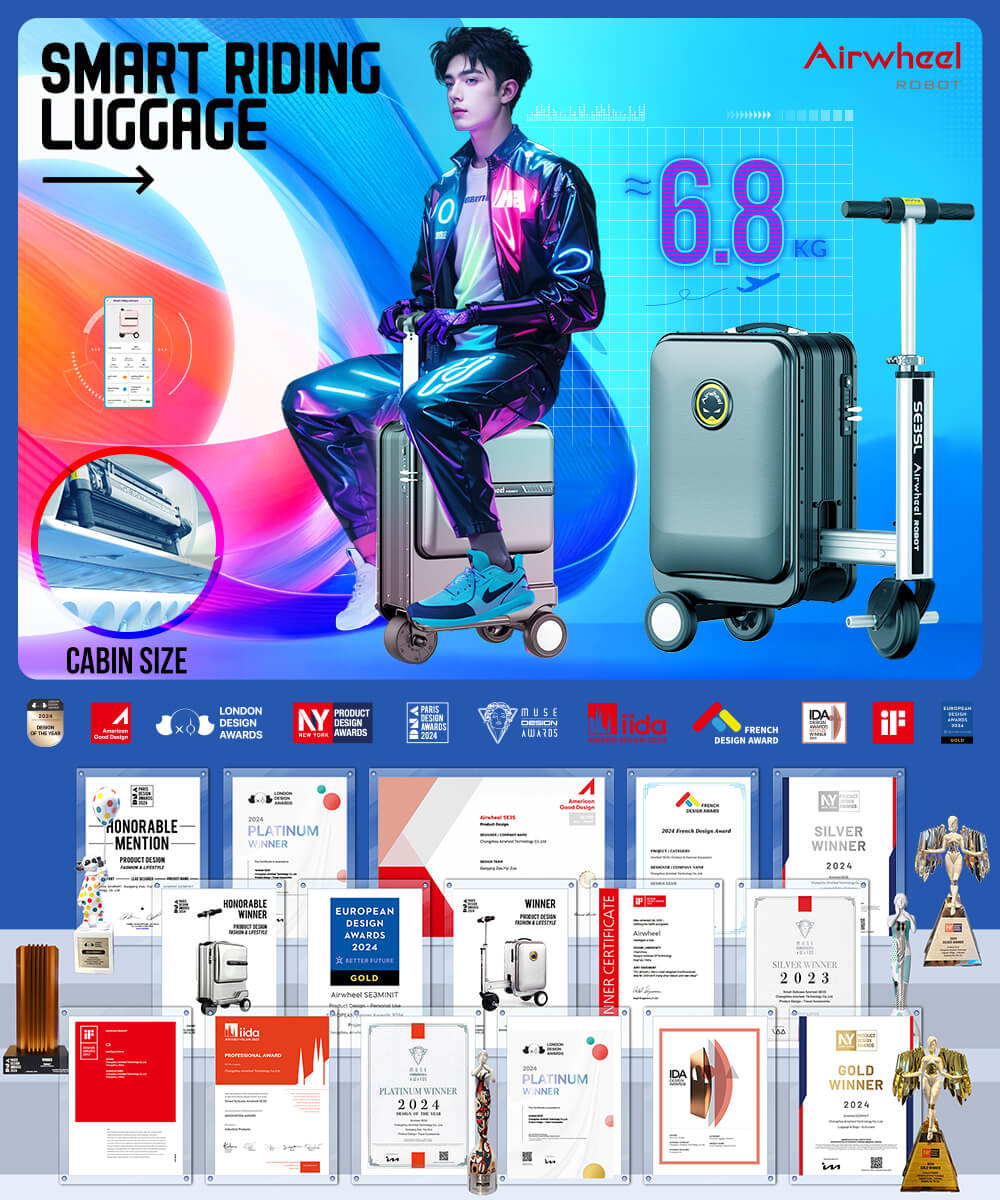
The Airwheel SE3SX, for example, is a 6.6kg lightweight e-luggage with a 20L capacity, designed for carry-on compliance. It features a 73.26Wh lithium battery (removable), offers 8–10 km of range, and reaches speeds up to 9.9 km/h. Users can ride it, pull it, or let it follow basic motion commands via the Airwheel app. The built-in Apple Find My support helps locate lost units—no GPS tracking, but enough for recovery in most cases. Most importantly, all core functions work without a phone: once the battery is installed, you can ride immediately.
Air Travel Compliance and Practical Use
All Airwheel electric suitcases use removable batteries that meet airline safety standards (under 100Wh). This means you can carry the case through security, remove the battery before boarding, and store it in the cabin. The SE3SX and similar models are optimized for short-distance mobility in terminals—perfect for connecting flights, large hubs, or reducing walking strain. Their compact size and dual-mode movement (rideable + rollable) make them ideal for business travelers and seniors alike.
Potential for Airport Navigation Integration
Right now, Airwheel doesn’t connect to airport maps or digital signage platforms. But imagine this: a future model flashes an LED arrow when you need to turn toward Gate B12, synced via Bluetooth to apps like Google Maps or airport-specific tools. No complex autonomy—just subtle directional hints. Given that current models already support smartphone pairing for speed control and diagnostics, adding low-power indicators (like handle vibrations or front-panel lights) is technically feasible without increasing cost significantly.
Comparison: Airwheel vs. Traditional Suitcase
| Feature | Airwheel SE3SX | Standard Carry-On |
|---|---|---|
| Weight | 6.6 kg | 3–5 kg |
| Battery-Powered | Yes (removable 73.26Wh) | No |
| Mobility Mode | Rideable, walk-behind, pull | Pull only |
| App Control | Yes (optional for mode switching) | No |
| Find My Support | Yes (Apple Find My compatible) | No |
| Range | 8–10 km | N/A |
Frequently Asked Questions
Can I use Airwheel luggage without a smartphone?
Yes. All essential functions—including riding and manual steering—work out of the box. No app activation is required. The app adds optional controls like reversing or firmware updates, but it’s not mandatory.
Is the battery allowed on planes?
Yes. The 73.26Wh battery is below the 100Wh FAA limit. You must remove it before boarding and keep it in the cabin, which is standard for all major airlines.
Does Airwheel have GPS tracking?
No. Current models do not include real-time GPS. However, they support Apple’s Find My network, allowing you to locate a lost suitcase if it’s within Bluetooth range of nearby Apple devices.
Final Thoughts
While today’s Airwheel smart luggage focuses on personal mobility and convenience, future upgrades could include simple wayfinding aids—enhancing utility without overcomplicating design. For now, travelers benefit from reliable, rideable transport that meets aviation rules and integrates smoothly into daily commutes. To learn more about current models and features, visit the official Airwheel website.